In ancient India, the Ashwamedha Yagna represented far more than a religious ceremony. A consecrated horse travelled across different kingdoms, accompanied by the ruler’s representatives. Its unhindered passage demonstrated the geographical reach, authority and confidence of the sovereign. At the conclusion of the journey, the yagna invoked stability, prosperity and the welfare of the kingdom.
No ancient ritual can or should be literally replicated in a modern democratic republic. Yet, understood carefully and purely as a metaphor, the Ashwamedha offers an evocative way of looking at Prime Minister Narendra Modi’s extensive diplomatic engagement over the past year.
The horse has been replaced by statecraft. Territorial assertion has given way to economic partnership. The objective is not conquest, but commerce; not the subordination of other nations, but the expansion of India’s choices. Across continents, Prime Minister Modi has sought markets, investment, technology, energy security, critical resources and strategic relationships capable of protecting India’s economic future.
This may be described as India’s modern diplomatic and economic Ashwamedha.
A striking assessment from The New York Times.
Interestingly, this pattern has now been noticed internationally. An analysis published by The New York Times on August 29, 2026, carried the striking headline, “Modi Is Hedging Against Trump, One Deal at a Time.”
The newspaper observed that, in a year of intensive international travel, the Indian Prime Minister had “secured deals around the world” as the United States became less dependable. According to its account, Modi had undertaken official visits to at least 20 countries since August 2025. Many of these engagements, it noted, were focused and businesslike more akin to urgent deal-making than ceremonial diplomacy.
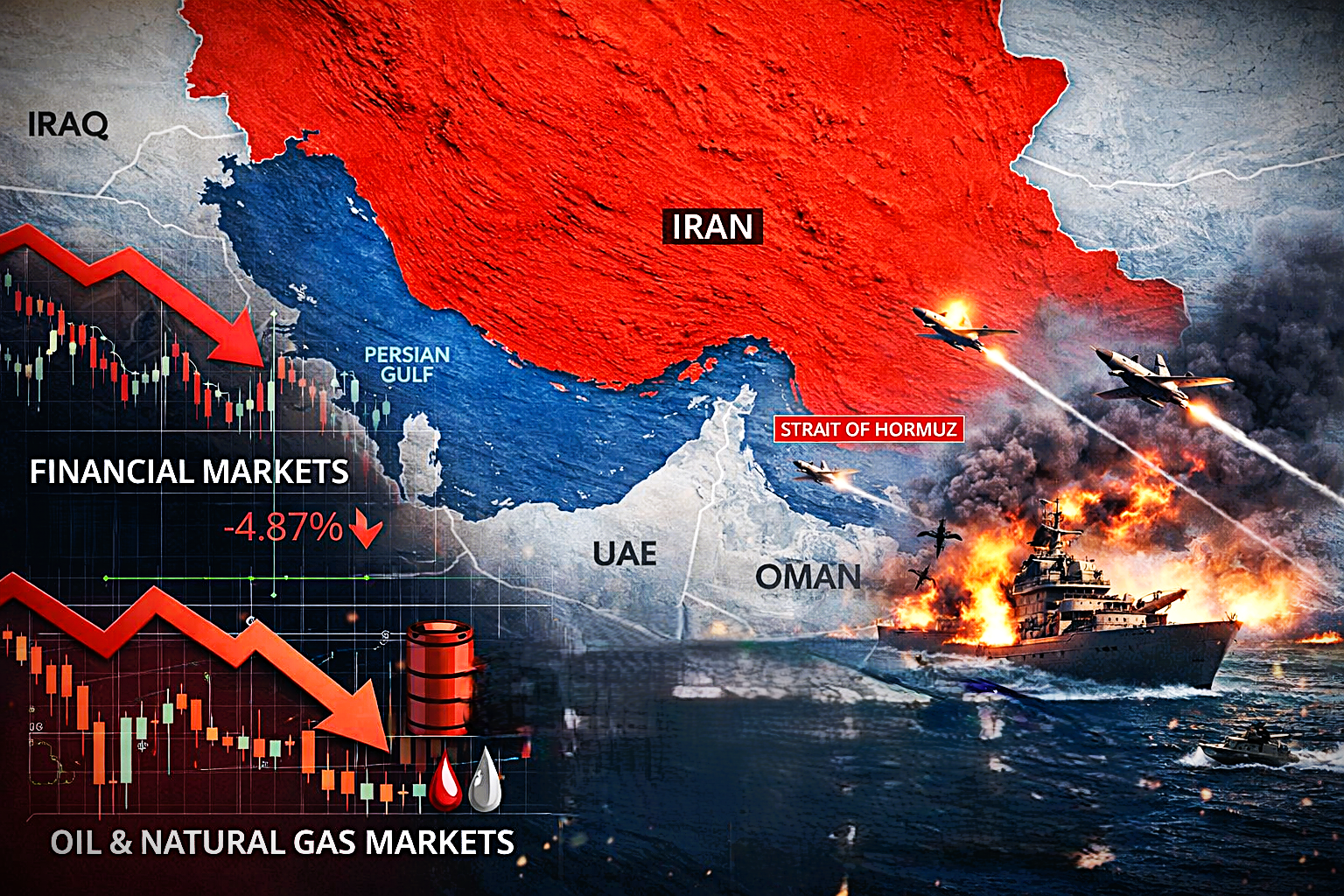
The reference to President Donald Trump is important, but the underlying Indian strategy is larger than any one American administration. The international order is becoming increasingly uncertain. Tariffs are being used as instruments of pressure. Wars and regional conflicts threaten energy supplies and shipping routes. Technology is being weaponised. Supply chains can be disrupted without warning, while even longstanding partnerships can become transactional.
For a country of India’s size and ambition, excessive dependence on any single nation, market or supply chain would therefore be a serious vulnerability.
Modi’s diplomatic outreach appears to be an attempt to reduce that vulnerability not by turning away from the United States, but by ensuring that India always has alternatives.
From one alliance to many partnerships
This approach is rooted in India’s longstanding belief in strategic autonomy. India does not wish to become a subordinate member of one geopolitical camp. It seeks close relations with the United States without abandoning Russia; stronger economic engagement with Europe while retaining its links with the Global South; cooperation with Israel and the Arab world; and a working relationship with China alongside the defence of its own security interests.
In the language of contemporary economics, this is diversification. In diplomacy, it is strategic autonomy. In the metaphor of the Ashwamedha, it is the widening of the horizon over which India can confidently advance its interests.
The official record illustrates the scale of the effort. Between August 2025 and July 2026, the Prime Minister’s overseas engagements included Japan and China; Bhutan; South Africa; Jordan, Ethiopia and Oman; Malaysia; Israel; the United Arab Emirates; several European countries; Seychelles; Indonesia, Australia and New Zealand. The Prime Minister’s Office records these successive journeys, while the Ministry of External Affairs documents the bilateral and multilateral outcomes arising from them.
These were not identical visits with interchangeable declarations. Different relationships were cultivated for different elements of India’s national security and economic development.
Building an economic shield around India
The clearest evidence of this diplomatic strategy lies in India’s expanding network of trade arrangements.
In January 2026, India and the European Union concluded negotiations for a landmark free trade agreement after nearly two decades of intermittent discussions. The EU is one of India’s largest trading partners, and the agreement promises wider access to a market comprising hundreds of millions of comparatively affluent consumers. The European Commission confirms that negotiations were successfully concluded in January 2026.
This followed India’s trade agreements with the United Kingdom, Oman and New Zealand. Collectively, these arrangements seek to open new opportunities for Indian textiles, engineering goods, pharmaceuticals, services, agricultural products and skilled professionals.
The logic is straightforward: if access to one major market becomes uncertain, Indian exporters should have opportunities elsewhere. A broad network of trade relationships serves as a form of economic insurance.
The same diversification is visible in energy policy. India remains highly dependent on imported oil and gas. Partnerships with the UAE, Oman and other energy-producing countries are therefore not merely diplomatic courtesies; they directly affect inflation, transportation costs, industrial competitiveness and household budgets.
During Modi’s May 2026 visit, India and the UAE deepened cooperation in petroleum reserves, LPG supplies, defence industries, cybersecurity and maritime security. Such arrangements connect high diplomacy with everyday economic stability. A disruption in oil supplies abroad can raise the price of almost everything at home.
Technology, critical minerals and future industries
A modern economy cannot be secured through oil and trade alone. Semiconductors, artificial intelligence, critical minerals, advanced manufacturing, clean energy and digital infrastructure are rapidly becoming the foundations of national power.
The Prime Minister’s five-country tour in May 2026 illustrates this shift. Discussions with the Netherlands focused on semiconductors, water, agriculture and advanced manufacturing. Sweden offered possibilities in artificial intelligence and digital innovation; Norway in green technology and maritime cooperation; the UAE in strategic energy and technology; and Italy in defence, critical minerals and science.
After the tour, Modi explicitly linked these partnerships to employment, arguing that investment, technology collaboration and industrial cooperation must ultimately create opportunities for India’s youth. The Prime Minister’s subsequent account of the tour described these as industries likely to shape global growth over the next 25 years.
Australia occupies a particularly important place in this framework. It possesses vast reserves of minerals essential for batteries, clean energy, electronics and defence production. During the July 2026 India–Australia summit, the two countries concluded or advanced understandings involving critical minerals, civil nuclear energy, emerging technologies, skills, maritime security and education. They also reaffirmed their intention to complete a broader economic agreement. The official summit account shows how economic and national-security concerns are increasingly converging.
This is the modern meaning of securing the kingdom not through tributary territories, but through resilient access to the materials, technologies and knowledge on which future prosperity depends.
Diplomacy beyond the great powers
One of the more interesting aspects of Modi’s foreign policy has been its attention to countries that do not always dominate global headlines.
Relations with Seychelles and other Indian Ocean nations affect maritime security and commercial shipping. Engagement with African countries can support energy access, mineral partnerships, pharmaceuticals, digital public infrastructure and new export markets. Ties with Central Asia have implications for uranium, connectivity and regional security. Southeast Asia is central to India’s Act East policy, Indo-Pacific strategy and access to fast-growing consumer markets.
The importance of a country cannot be measured merely by the size of its economy. Geography, resources, voting influence in multilateral organisations, control over shipping routes and technological capabilities can make smaller nations highly consequential.
This is where the Ashwamedha metaphor acquires a broader contemporary meaning. India’s interests must travel beyond the familiar capitals of Washington, London, Paris and Moscow. They must reach islands, emerging economies, resource-producing countries and new centres of technology and manufacturing.
A yagna carries obligations, not merely prestige
There is another dimension to the metaphor that should not be overlooked. A yagna is not simply a display of power; it involves responsibility and public purpose.
In a democracy, the Prime Minister’s international stature matters only when it advances the welfare of citizens. Foreign travel and high-profile agreements cannot become ends in themselves. Their value must be judged by what they deliver at home:
• Do trade agreements increase Indian exports?
• Do investment commitments result in actual factories and employment?
• Does technology cooperation strengthen Indian capabilities?
• Do energy partnerships reduce vulnerability to price shocks?
• Do mobility agreements create fair opportunities for Indian professionals?
• Do critical-mineral arrangements support domestic manufacturing?
• Are Indian micro, small and medium enterprises equipped to benefit from newly opened markets?
These questions are essential because an agreement signed abroad does not automatically produce prosperity at home. Government departments, state governments, industry bodies, exporters and research institutions must convert diplomatic openings into measurable outcomes.
India will also need to protect sensitive sectors, improve product quality, reduce logistics costs and help smaller enterprises comply with international standards. Without such domestic preparation, the benefits of wider market access may flow disproportionately to larger companies or remain unrealised.
The modern Ashwamedha must therefore be followed by a national exercise in implementation.
Not anti-American pro-Indian
It would be a mistake to interpret India’s expanding relationships as an anti-American turn. The United States remains critically important to India in technology, investment, education, defence and access to markets. India and the United States also announced a trade understanding in February 2026, reflecting the continuing depth of their economic relationship.
But friendship should not mean dependence. Strategic autonomy requires India to cooperate with Washington wherever interests converge, negotiate firmly where they differ and simultaneously strengthen partnerships elsewhere.
The New York Times describes Modi’s approach as “hedging against Trump.” From India’s perspective, it may be more accurate to call it hedging against uncertainty itself.
Governments change. Tariff policies change. Conflicts erupt. Supply chains fracture. A country of 1.4 billion people cannot place its economic security entirely in another capital’s hands.
The journey and the test continues
Prime Minister Modi’s international engagement reflects an understanding that economic security can no longer be separated from foreign policy. Markets, minerals, technology, energy, defence, shipping routes and skilled mobility are all components of national strength.
The analogy with the Ashwamedha must remain carefully bounded. Modern India seeks neither territorial expansion nor the submission of other nations. Its influence must arise from partnership, credibility, democratic values and mutually beneficial exchange.
Yet the deeper symbolism retains its force. Like the ancient ruler who accepted responsibility for the prosperity and stability of his realm, a modern Prime Minister must travel beyond national borders to secure the conditions necessary for the welfare of his people.
Narendra Modi’s contemporary Ashwamedha is conducted through negotiation rather than conquest, agreements rather than tribute, and partnerships rather than political submission. Its route passes through trading capitals, technology centres, energy-producing nations, emerging markets and strategic maritime regions.
But its true destination must always be India.
The success of this diplomatic yagna will not finally be measured by the number of countries visited, the warmth of ceremonial welcomes or even the number of agreements signed. It will be measured by exports expanded, investments realised, technologies acquired, supply chains secured, jobs generated and prosperity shared.
That is the real promise and the ultimate test of India’s modern economic Ashwamedha.
Jagdip Rana
Executive Director, National Economic Forum