A tanker carrying Russian diesel is due to leave port on October 22 bound for the United States. It is the first physical delivery under the energy arrangement Donald Trump struck with Vladimir Putin on October 9. The deal has started small. But in less than two weeks it has reshaped US sanctions policy on Russia, strained ties with Kyiv, and changed the terms of India’s own dispute with Washington over Russian oil.
The first cargo: a date, but few details
Deputy Prime Minister Alexander Novak said on October 21 that the vessel will carry 40,000 metric tons of diesel and that paperwork on the supply is nearly complete. He did not name the port it will sail from. He said more shipments would follow and that Russia would meet US needs “to the extent of our capabilities.”
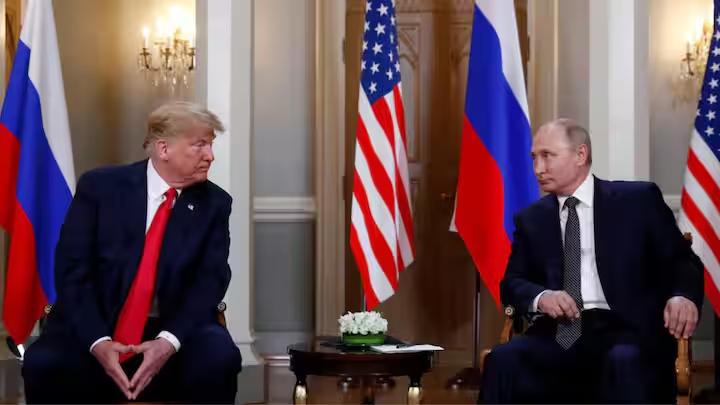
The same day, Putin hosted US special envoy Steve Witkoff in St Petersburg. Witkoff thanked him for lifting Russia’s export restrictions. Putin said global diesel prices had fallen 5–6% since the agreement and that the first tankers would leave within two to three days. He also flagged an unresolved issue: payment. According to sources , he said the “financial component should be provided.” He offered to supply fertiliser to the US market in large quantities and to help Washington on Iran.
Novak also made clear that the US comes first. Deliveries to other buyers will depend on how fast Russian refineries recover from Ukrainian drone strikes. If full volumes are reached only by year-end, other countries will receive their earlier volumes then.
What was agreed
Trump’s figures are 300,000 tonnes immediately (about 2.25 million barrels, by Reuters’ conversion), 500,000 tonnes in November, and 1 million tonnes “immediately thereafter.” Kyiv Post puts the total ceiling at up to 4.8 million tonnes. To clear the legal path, the US Treasury’s OFAC issued a general licence authorising Russian diesel transactions until April 7, 2027. Russia also had to lift its own export ban, which it had imposed to deal with domestic shortages caused by Ukrainian refinery strikes.
Why Washington moved
Domestic fuel prices drove the decision. When the deal was announced, US diesel averaged $6.23 a gallon, after a record $6.52 in September. That spike began after the US–Israel conflict with Iran erupted in February 2026. With midterms in early November, most observers see the deal as an attempt to help Republican candidates.
The volumes are small relative to that problem. One analysis noted that the first 40,000-tonne cargo equals less than two hours of US demand, and that pump prices have not fallen. Zelensky put Russia’s overall influence on the global diesel market at 2.2%.
Backlash at home, friction with Kyiv
Criticism has come from both parties. Republican Don Bacon called the deal “a grave error by the president.” Senate Minority Leader Chuck Schumer described it as a “deal with the devil.” Senators from both parties warned it could help fund Russia’s war.
Kyiv’s objections go further. Zelensky called the deal a weak decision by strong partners that would prolong the war. Two days after announcing it, Trump declared an immediate “energy ceasefire” between Russia and Ukraine. Ukrainian officials said they learned of it from his social media post. Zelensky said Ukraine had held off striking Russian energy facilities after the announcement, while the Kremlin has neither confirmed nor rejected the truce. Since the diesel announcement, Ukraine has also complained of disrupted intelligence sharing and limits on its use of the Starshield satellite system.
The India angle: from double standard to reprieve
For New Delhi, the deal first exposed a contradiction. Washington was buying Russian diesel while threatening India with 100% tariffs for buying Russian oil. That position did not last.
On October 16, Trump issued an executive order suspending provisions of the Lindsey O. Graham Sanctioning Russia and Iran Act of 2026. Those provisions could have imposed tariffs of up to 100% on the five largest buyers of Russian crude and gas. The waiver is not specific to India and could also benefit China. It has no expiry date, but it can be withdrawn at any time.
Trade in the meantime is steady. India bought about 1.82 million barrels per day of Russian crude in September. Kpler expects 1.8–1.9 million bpd ( barrels per day ) in October, well below the June and July highs of about 2.6 million bpd.
Diplomacy has moved quickly. At talks with S Jaishankar in Mumbai on October 20, Rubio said a trade agreement was about as close as possible without being signed. Washington’s message on energy was also clear: the State Department said Rubio stressed that more energy trade with the US could help diversify India’s supply chains, and he suggested India buy more Venezuelan oil. Rubio did acknowledge that India still buys substantial Russian volumes because it is hard to switch suppliers overnight.
What to watch
- Delivery: whether the November tranche of 500,000 tonnes ships on schedule, and how the payment question Putin raised is resolved.
- The waiver: whether Congress tries to restore the sanctions law’s force. A waiver that can be revoked at any time leaves Indian refiners with continuing uncertainty.
- The trade deal: whether the India–US agreement Rubio called “very close” is signed, and whether it includes energy-purchase commitments.
- The truce: whether Moscow confirms the energy ceasefire. That will decide whether Russian refining capacity, and the promised volumes, can actually recover.
References
- Reuters via Investing.com: “Russia says it will send first diesel cargo to US on Thursday” (Oct 21, 2026): https://www.investing.com/news/commodities-news/russia-says-it-will-send-first-diesel-cargo-to-us-on-thursday-4962779
- Reuters via Daily Sabah: “Russia to send off first diesel cargo to US after sanctions relief” (Oct 21, 2026): https://www.dailysabah.com/business/energy/russia-to-send-off-first-diesel-cargo-to-us-after-sanctions-relief
- The Moscow Times: “First Shipment of Russian Diesel Expected to Depart for the United States Under Trump Deal” (Oct 21, 2026): https://www.themoscowtimes.com/2026/10/21/first-shipment-of-russian-diesel-expected-to-depart-for-the-united-states-under-trump-deal-a94039
- OilPrice.com: “Russia to Send First Diesel Tanker to U.S. on Thursday” (Oct 21, 2026): https://oilprice.com/Latest-Energy-News/World-News/Russia-to-Send-First-Diesel-Tanker-to-US-on-Thursday.html
- BreezyScroll: “Russia’s First 40,000-Ton Diesel Cargo to US Sails Thursday” (Oct 21, 2026): https://www.breezyscroll.com/world/russia-diesel-tanker-us-trump-putin-deal
- Al Jazeera: “Will Russia’s diesel shipment to the US lower prices before midterms?” (Oct 21, 2026): https://aljazeera.com/economy/2026/10/21/will-russias-diesel-shipment-to-the-us-lower-prices-before-midterms
- NPR: “U.S. and Russia tout diesel deal to ease sanctions and reopen fuel flows” (Oct 10, 2026): https://www.npr.org/2026/10/10/nx-s1-5996938/u-s-and-russia-tout-diesel-deal-to-ease-sanctions-and-reopen-fuel-flows
- CNN: “Trump’s US-Russia diesel deal draws bipartisan criticism” (Oct 11, 2026): https://www.cnn.com/2026/10/11/politics/us-russia-diesel-deal-bipartisan-criticism
- Kyiv Post (Oct 2026): https://www.kyivpost.com/post/86846 and https://www.kyivpost.com/post/86816
- InvestingLive: “Trump says Russia, Ukraine agree energy ceasefire two days after Russian diesel deal”: https://investinglive.com/commodities/trump-says-russia-ukraine-agree-energy-ceasefire-two-days-after-russian-diesel-deal/
- Euromaidan Press: https://euromaidanpress.com/?p=425188
- Business Today: “India reviews Trump’s decision to purchase diesel from Russia” (Oct 12, 2026): https://www.businesstoday.in/india/story/india-reviews-trumps-decision-to-purchase-diesel-from-russia-report-560901-2026-10-12
- Swarajya: “India set to maintain Russian oil imports…” (Oct 17–18, 2026): https://swarajyamag.com/news-brief/indias-russian-oil-imports-stabilise-at-18-19-million-bpd-after-trump-waives-sanctions-law and https://swarajyamag.com/news-brief/india-set-to-maintain-russian-oil-imports-near-current-levels-after-trump-waives-sanctions
- NiftyTrader (Oct 17, 2026): https://www.niftytrader.in/markets/?p=32290
- AP via KSAT/KSL: “Rubio and India’s foreign minister hold talks in Mumbai…” (Oct 20, 2026): https://www.ksat.com/news/politics/2026/10/20/rubio-and-jaishankar-hold-talks-in-mumbai-as-us-and-india-aim-to-finalize-trade-deal/ and https://www.ksl.com/article/51638590/rubio-and-indias-foreign-minister-hold-talks-in-mumbai-as-both-sides-aim-to-finalize-a-trade-deal
- Breitbart: “Rubio Visits India to Talk Trade, Terrorism, and Russian Oil” (Oct 20, 2026): https://www.breitbart.com/asia/2026/10/20/rubio-visits-india-to-talk-trade-terrorism-and-russian-oil/