AI risks deepening asymmetry in India-US trade
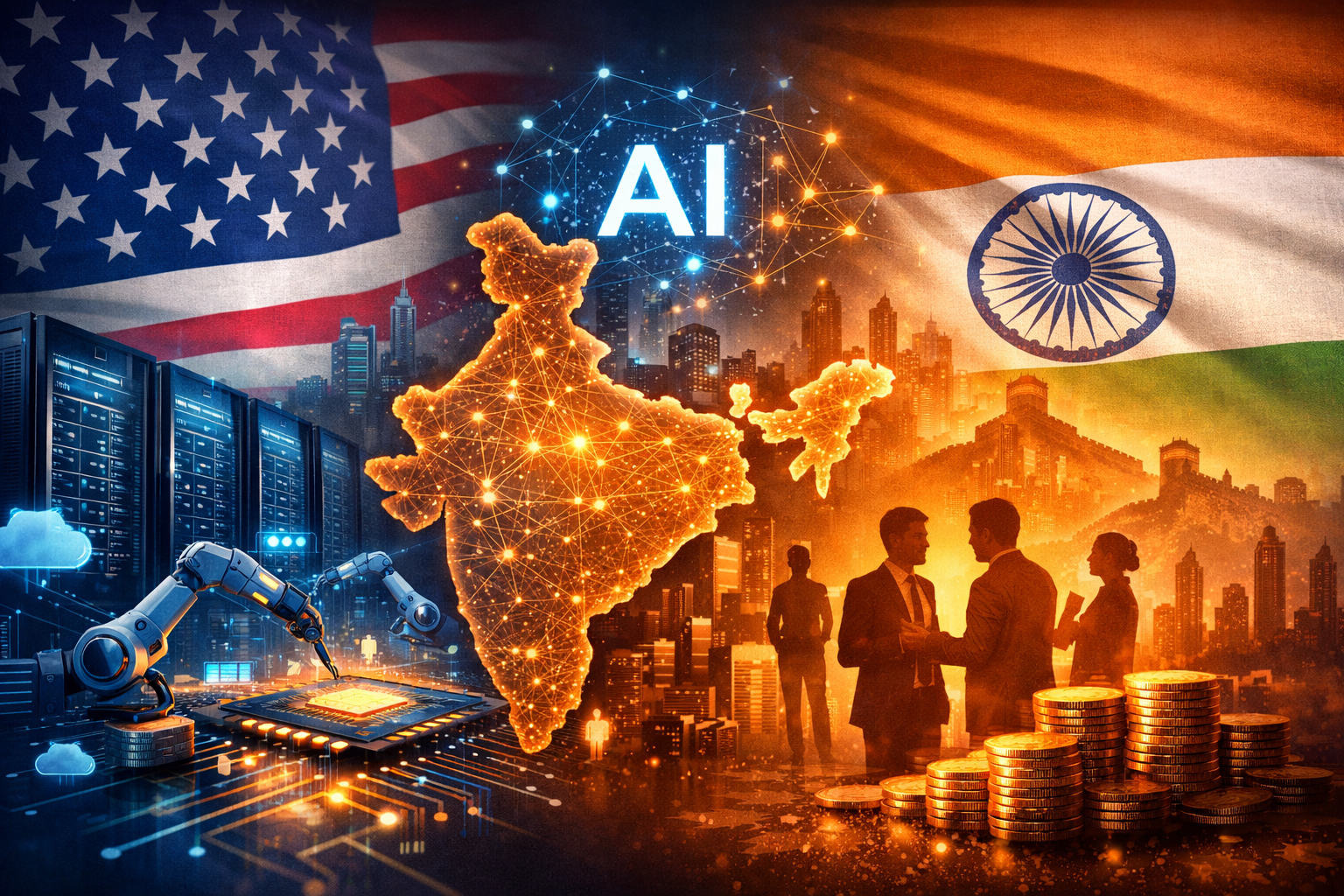
The interim India-U.S. trade framework seeks to deepen bilateral commerce, but it also reveals a critical asymmetry. Under the interim arrangement, India has indicated its intent to import goods worth nearly US $500 billion from the United States over the next five years, while no corresponding numerical commitment is reflected on the US side. At first glance, this may not appear threatening, given India’s trade surplus of over US $40 billion with the U.S. in recent years. However, historical trade patterns may no longer be reliable indicators in an era increasingly shaped by artificial intelligence (AI).
India’s services-led surplus is heavily dependent on IT and IT-enabled services, a sector particularly vulnerable to AI-driven automation. White-collar roles, especially in coding, data processing and routine software services, are among the most exposed. In 2023-24, the US accounted for roughly 54% of India’s IT services exports, making any disruption in this corridor economically consequential. As AI adoption accelerates, the US may increasingly internalise services that were previously outsourced, thereby reducing demand for Indian exports.
The absence of a clearly articulated U.S. import commitment in the interim agreement, thus, raises an important question – what will the United States buy from India if traditional IT services lose relevance? Without safeguards or diversification clauses, India risks committing to higher imports without securing future-proof export guarantees.
Given that most frontier AI firms are headquartered in the US, India’s negotiating strategy should have prioritised supply-side protections, transitional safeguards or explicit commitments in emerging sectors. In the absence of such measures, the agreement risks entrenching an imbalance rather than advancing equitable trade in the AI age.